
Public Lecture
How Aspen Changed the World of Science
Julia Menzel
University of Toronto
Wed, Jul 8, 5:30–6:30pm
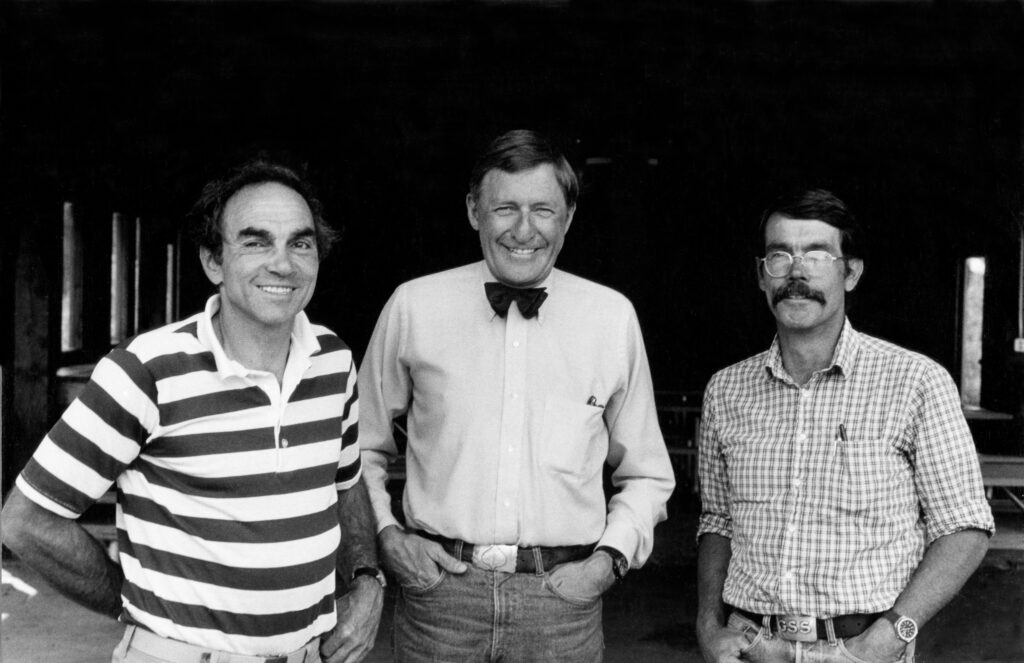
In 1962, a pair of enterprising young scientists with a passion for the outdoors founded a summer retreat for theoretical physicists in the small town of Aspen, Colorado in the cradle of the Rocky Mountains. From modest beginnings, the Aspen Center for Physics has grown over the last sixty-four years into one of the most significant organizations in all of American science. This lecture traces the history of the Aspen Center for Physics and its broader impact through more than half a century of upheavals and changes in both science and society. It follows the Center from its early days as a utopian refuge from the strictly regimented environment of the Cold War-era research university, through turbulent years of federal funding cuts and political crises for American physics, and into years of growth and expanding influence during which the Center has come to serve as a prominent and internationally-imitated model for a new kind of scientific institution.

About Julia Menzel
Julia Menzel is a historian of science and a postdoctoral fellow at the University of Toronto in the Institute for the History and Philosophy of Science and Technology. She has a PhD in the history of science from MIT, an MPhil in the History and Philosophy of Science from the University of Cambridge, and a BS in Physics from Yale University. She has written about the history of modern physics, the history of scientific institutions, and the politics of science funding in the United States. Her research has been supported by grants and fellowships from the National Science Foundation, the American Institute of Physics, and the American Philosophical Society, among other organizations. She is a first-time visitor to Aspen this summer, where she is conducting research in the ACP’s historical archives as part of a book about the history of theoretical physics since the 1970s.
Heinz R. Pagels Public Lecture Series
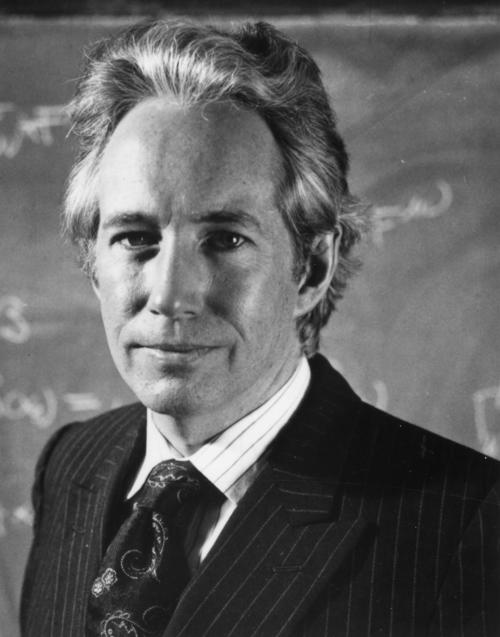
Heinz R Pagels was a professor of physics at Rockefeller University, president of the New York Academy of Science, a trustee of the Aspen Institute, and a member of the Aspen Center for Physics for twenty years, serving as a participant, officer, and trustee. He was also President of the International League for Human Rights. His work on chaos theory inspired the character of Ian Malcolm in the Jurassic Park book and movies. A part-time local resident, Professor Pagels died here in a mountaineering accident in 1988. His family and friends instituted the lecture series in his honor because he devoted a substantial part of his life to effective public dissemination of scientific knowledge.