
Public Lecture
How Your Immune System Learns
Ned Wingreen
Princeton University
Wed, Jul 29, 5:30–6:30pm
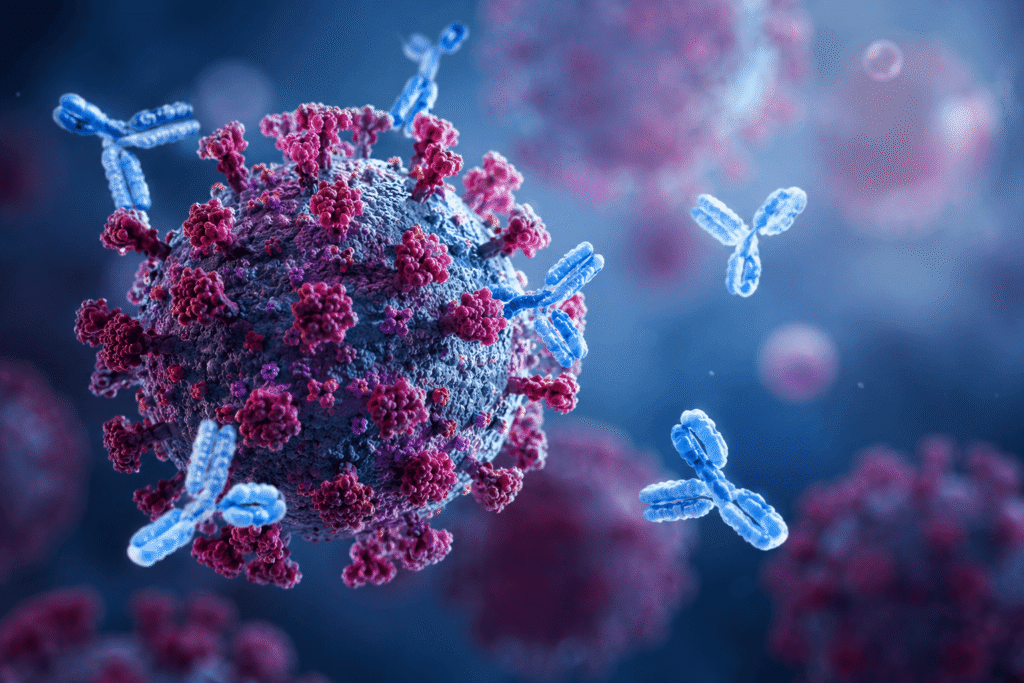
Your immune system faces a remarkable challenge: it must defend you against viruses and other pathogens it has never seen before. It solves this problem by learning. Instead of storing a fixed list of answers, it tries new approaches and remembers the ones that worked in the past. In this lecture, I will describe how the body generates an enormous repertoire of antibodies, each with a different molecular “shape,” and how infection or vaccination triggers a surprising process in which some immune cells deliberately mutate their genes to generate novel antibodies. These cells undergo cycles of mutation and competition within your lymph nodes (hence the swelling!), to generate improved variants. The result is better antibodies that bind more effectively to their targets. This is Darwinian evolution, but accelerated to the timescale of days and occurring inside your own body. I will discuss how biophysical models can help us understand this learning process, why it matters for vaccines, how failures of immune learning contribute to autoimmunity, and why immune learning might become less effective with age.
About Ned Wingreen
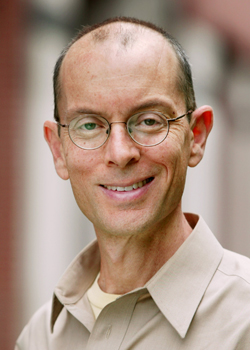
Ned Wingreen received his Ph.D. in theoretical condensed matter physics from Cornell University in 1989. He did his postdoc in mesoscopic physics at MIT before moving, in 1991, to the newly founded NEC Research Institute in Princeton. At NEC, he continued to work in mesoscopic physics, but also started research on the statistical mechanics of protein folding. Thinking about proteins led him inexorably down the path into biology. During a sabbatical at UC Berkeley in 1999, his primary focus shifted to systems biology of bacteria. Wingreen joined Princeton University as a Professor of Molecular Biology in 2004, with a joint appointment in the Lewis-Sigler Institute as of 2008. Wingreen's current research focuses on modeling the biophysics of bacteria and their viruses (phage), intracellular phase separation, and most recently immunology.
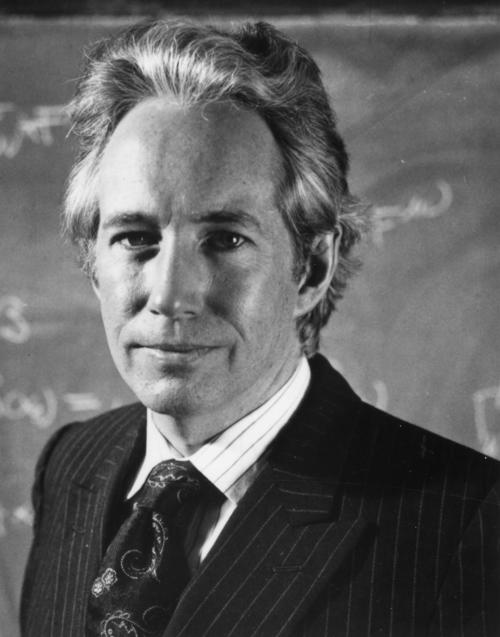
Heinz R. Pagels Public Lecture Series
Heinz R Pagels was a professor of physics at Rockefeller University, president of the New York Academy of Science, a trustee of the Aspen Institute, and a member of the Aspen Center for Physics for twenty years, serving as a participant, officer, and trustee. He was also President of the International League for Human Rights. His work on chaos theory inspired the character of Ian Malcolm in the Jurassic Park book and movies. A part-time local resident, Professor Pagels died here in a mountaineering accident in 1988. His family and friends instituted the lecture series in his honor because he devoted a substantial part of his life to effective public dissemination of scientific knowledge.