

Public Lecture
The Future of Time: Quantum Clocks and the Invisible Universe
Marianna Safronova
University of Delaware
Wed, Feb 25, 5:30–6:30pm
A hundred years ago, we did not know what atoms were really made of, or why they emitted light only of very specific colors. That puzzle led to the invention of quantum mechanics. The physicists of the 1920s were trying to understand nature, yet from that work came lasers, modern electronics, GPS, and a long list of everyday technologies.
A century later, we have learned to do quantum mechanics in the laboratory. We can cool, trap, and control individual atoms, and use them to build quantum atomic clocks so precise that they would not lose even a fraction of a second over the entire time since the Big Bang. These clocks are so sensitive that lifting one by millimeters measurably changes its tick rate due to changes in in Earth’s gravity.
Meanwhile, we face a new and deeper puzzle: we do not know what most of the universe is made of. Decades of observations point to dark matter and dark energy that dominate the cosmos, yet their nature remains unknown. I will describe how quantum clocks work can act as new observatories for this invisible universe, searching for subtle drifts in their ticking that could signal dark matter, and testing gravity on Earth and, in the future, in space.

About Marianna Safronova
Marianna Safronova is a Professor of Physics at the Department of Physics and Astronomy, University of Delaware and an Adjunct Fellow of the Joint Quantum Institute, NIST and the University of Maryland. She earned her Ph.D. in physics from the University of Notre Dame, USA in 2001. Her diverse research interests include applications of quantum technologies to search for physics beyond the standard model of elementary particles and fields, applications of quantum technologies in space, development of atomic and nuclear clocks and their applications, ultra-cold atoms and quantum information, studies of fundamental symmetries, dark matter searches, quantum many-body theory and development of high-precision relativistic atomic codes, development of the online atomic data portal, highly-charged ions, superheavy atoms, and other topics. Safronova is an author of 230 peer-reviewed publications. She and collaborators developed freely available and sustainable online data portal contributing to U.S. cyber infrastructure ecosystem, improving usability and data access for the atomic physics, astrophysics, and plasma physics communities. She is a Fellow of the American Physical Society and 2018-2019 Chair of American Physical Society Division of the Atomic, Molecular, and Optical Physics. Learn more at https://www.mariannasafronova.
Marianna Safronova was elected a fellow of the American Physical Society (APS) in 2011 for innovative development of high-accuracy first-principles methods of computational atomic structure and dynamics, and their application to optical atomic clocks, quantum computing with neutral atoms, and tests of fundamental symmetries. She was nominated by the Division of Atomic, Molecular and Optical Physics.
She received the 2000 SGI Award for Excellence in Computational Sciences and Visualization at the University of Notre Dame for work Parity Nonconservation in Atomic Francium. This award recognizes outstanding contributions by a graduate student in the areas of computational sciences and visualization.
Nick and Maggie DeWolf Public Lecture Series
The Nick and Maggie DeWolf Foundation has sponsored our winter public lecture series since their inception in 1985. The Nick and Maggie DeWolf Foundation is a nonprofit organization based in Aspen, Colorado. Its core tenet is to provide support to groups and organizations interested in improving the quality of life and education in the world. During the winter, Aspen Center for Physics hosts week-long conferences, and during each conference one of the conference participants is asked to give a public physics talk. You can watch past talks on our YouTube channel here.
Other Upcoming Events
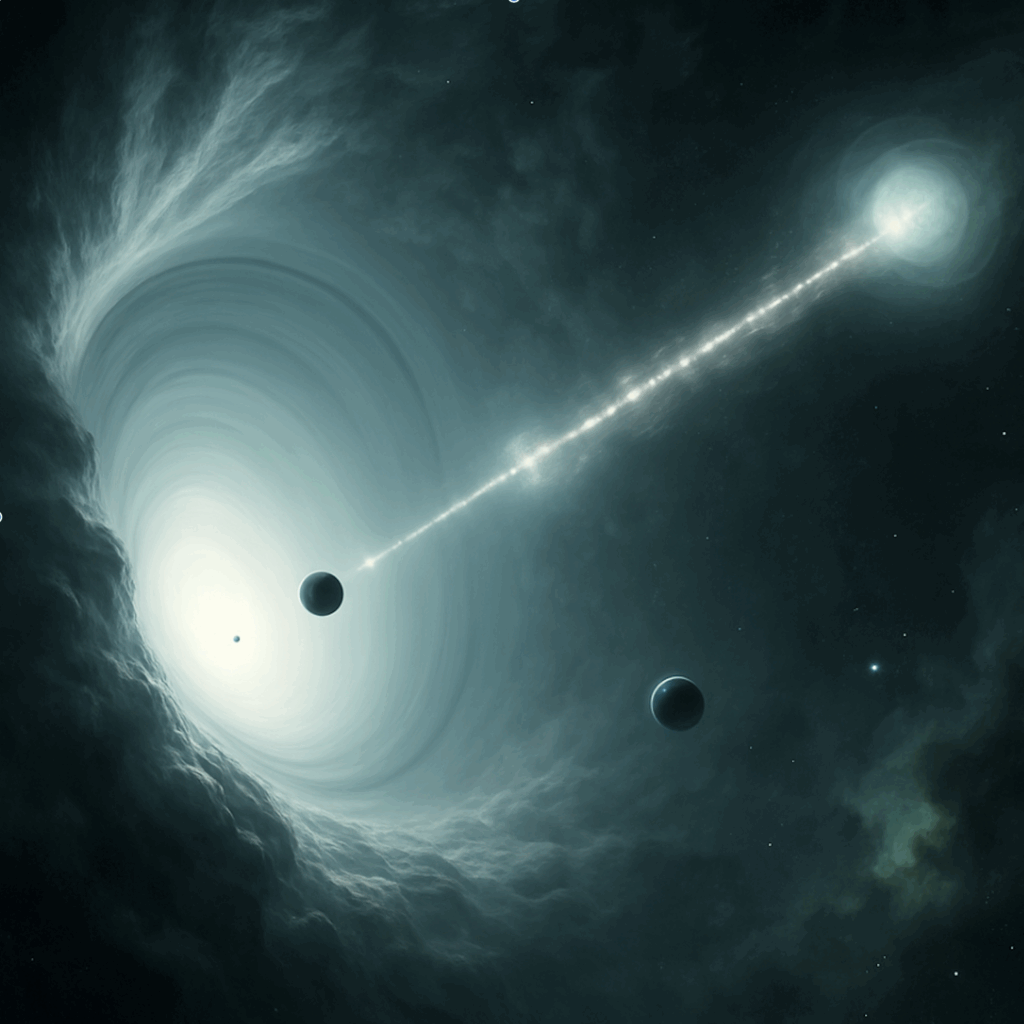
Following the Neutrino Into Physics' Strangest Realms
Wed, Jan 7, 5:30–6:30pm
Flug Forum, Aspen Center for Physics
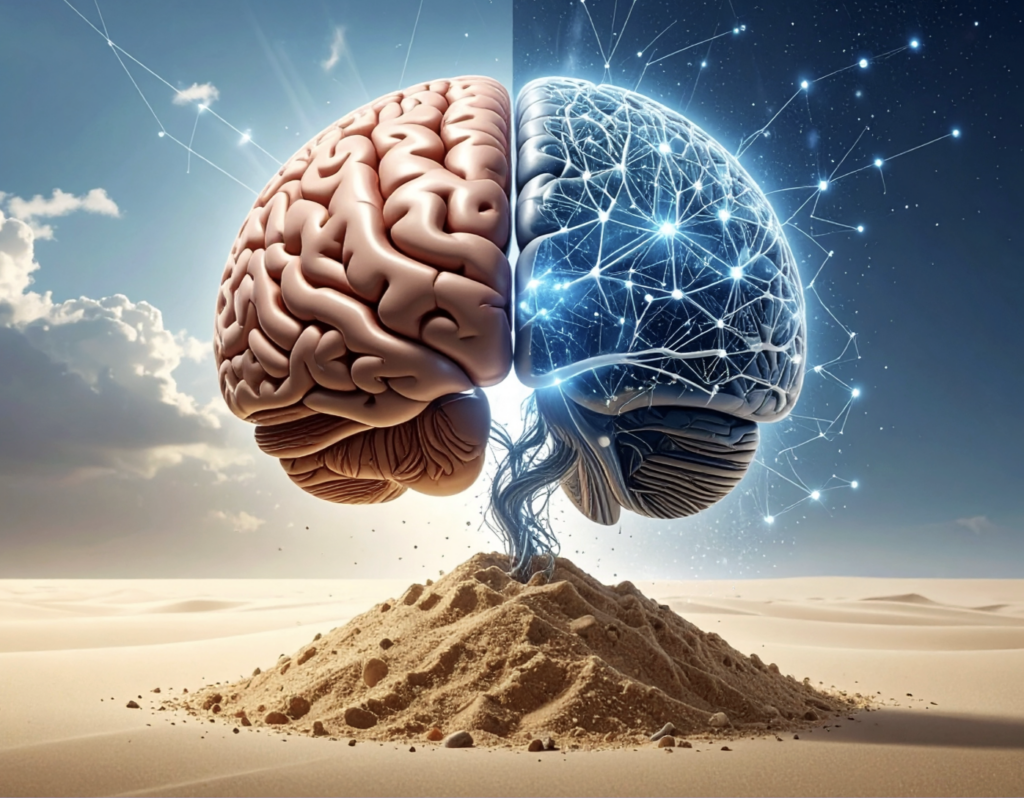
Training Sand to Think: AI and the Future of Science
Wed, Jan 14, 5:30–7pm
Paepcke Auditorium at the Aspen Institute
How AI is and isn't Revolutionizing Science
Wed, Feb 4, 5:30–6:30pm
Flug Forum, Aspen Center for Physics